
The Difference Between Capacity and Pelvic Floor Dysfunction

The relationship between strength training and pelvic floor dysfunction is one of the most misunderstood topics in both women's health and the fitness industry. On one side of the conversation are those who insist heavy lifting is damaging to the pelvic floor and should be avoided. On the other are those who claim strength training cannot contribute to pelvic floor symptoms at all. As with most complex physiological questions, the truth lies somewhere in between.
If you coach women, chances are you've worked with a client who has experienced urinary leakage during exercise, feelings of heaviness or pressure during lifting, pelvic pain, abdominal doming, or concerns about pelvic organ prolapse.
You may have also encountered women who have stopped running, avoided strength training, or become fearful of exercise altogether because they believed their symptoms meant something was wrong.
The challenge for fitness professionals is that most certifications provide little to no education on female pelvic floor function. While coaches are typically taught general anatomy, biomechanics, and exercise principles, education on the female pelvis, pelvic floor, and the unique considerations of women's anatomy is often minimal or absent altogether.
As a result, many coaches are never taught how breathing mechanics, pressure regulation, exercise selection, movement strategies, load management, and recovery can influence pelvic floor function during real-world movement.
The question therefore isn't simply whether strength training can cause pelvic floor dysfunction. A more useful question is whether coaches understand enough about pelvic floor function to recognise how their programming and coaching decisions may influence symptom presentation.
The distinction is important because exercise itself is not inherently harmful. However, the way exercise is prescribed, progressed, coached, and tolerated by the individual can absolutely influence outcomes.
Why This Question Matters
Women's participation in strength training has increased dramatically over the last decade. More women than ever are engaging in resistance training, powerlifting, Olympic lifting, CrossFit, recreational sports, endurance events, and structured strength and conditioning programs. At the same time, awareness surrounding women's health and pelvic health has grown considerably, bringing conversations about urinary leakage, pelvic pain, prolapse symptoms, and postpartum recovery into mainstream fitness discussions.
This increased awareness is undoubtedly positive. Women are becoming more comfortable discussing symptoms that were historically dismissed, normalised, or ignored. However, it has also highlighted a significant gap in coach education.
Many fitness professionals have been taught how to improve strength, increase muscle mass, enhance sports performance, and support body composition goals. Far fewer have been taught how movement influences the female pelvic floor or how exercise prescription may affect symptom presentation.
The result is often a coaching environment where symptoms are either unnecessarily feared or completely dismissed.
Neither approach serves women particularly well.
When symptoms are ignored, opportunities for prevention and early intervention may be missed. When symptoms are feared, women are often encouraged to avoid activities that provide substantial physical and psychological benefits. The goal should not be to make women afraid of exercise. The goal should be to understand the factors that influence pelvic floor function so that exercise can be prescribed more effectively.
What Is Pelvic Floor Dysfunction?
One of the biggest misconceptions within the fitness industry is that pelvic floor dysfunction refers to a single condition with a single cause. In reality, pelvic floor dysfunction is an umbrella term used to describe a broad range of symptoms that may occur when the pelvic floor is not functioning optimally.
These symptoms can include urinary leakage, urgency, frequency, feelings of heaviness or pressure, symptoms associated with pelvic organ prolapse, pelvic pain, difficulties with bowel function, and sexual dysfunction. While these presentations are often grouped together under the same umbrella term, they can arise from very different mechanisms.
This distinction matters because symptoms do not automatically reveal the underlying cause.
For example, a woman experiencing stress incontinence during box jumps may have a very different presentation from a woman experiencing pelvic pain during squats. Similarly, two women experiencing urinary leakage may have entirely different contributing factors despite presenting with the same symptom.
Unfortunately, many discussions surrounding pelvic floor dysfunction immediately default to weakness as the explanation. While weakness may be a contributing factor in some cases, it is far from the only possibility.
The pelvic floor must be capable of generating force, but it must also be capable of relaxing, coordinating with breathing, responding to changes in pressure, and adapting to movement demands. A pelvic floor that is excessively tense, poorly coordinated, unable to relax effectively, or overwhelmed by the demands being placed upon it may also contribute to symptom development.
For coaches, this means that symptoms should be viewed as information rather than conclusions. The symptom itself tells us something is happening, but it does not necessarily tell us why.
Can Strength Training Cause Pelvic Floor Symptoms?
The evidence-informed answer is both yes and no.
Strength training itself is not inherently damaging to the pelvic floor. If it were, every female athlete participating in resistance training would inevitably develop symptoms. Clearly, this is not the case. Many women lift heavy loads throughout their lives without ever experiencing pelvic floor dysfunction.
At the same time, it would be inaccurate to suggest that exercise has no influence on pelvic floor function. Every exercise creates a specific set of demands that must be managed by the body. These demands include force production, pressure regulation, tissue loading, coordination, stability requirements, and recovery needs.
The pelvic floor is not exempt from these demands.
Consider two women performing the same deadlift with the same load, repetition scheme, and technical execution. One completes the session without symptoms, while the other experiences urinary leakage or feelings of heaviness. If the exercise itself were solely responsible for the symptom, both women would be expected to respond similarly.
Instead, what we observe in practice is that symptom presentation is influenced by a far broader range of variables.
Breathing mechanics, pressure regulation strategies, recovery status, fatigue accumulation, training history, movement efficiency, hormonal influences, previous pregnancies, injury history, and overall load tolerance can all affect how a particular exercise is experienced.
This highlights one of the most important concepts coaches must understand: exercises do not exist in isolation. An exercise is simply a stimulus. How an individual responds to that stimulus depends on the interaction between the demands of the task and the capacity of the person performing it.
The Programming Mistakes Most Coaches Never Consider
One of the greatest oversights in traditional fitness education is the tendency to focus on exercises rather than demands. Coaches often become highly skilled at selecting exercises while paying less attention to the cumulative physiological demands those exercises create.
When viewed through a pelvic floor lens, this distinction becomes particularly important.
Many coaches can identify that a squat and a deadlift are different exercises. Fewer consider how combining heavy squats, deadlifts, plyometrics, sprint intervals, abdominal circuits, and high-volume conditioning within the same training week may influence pressure management demands and recovery requirements.
None of these exercises are inherently problematic. In fact, they may all be entirely appropriate within the right context. Problems often arise when the cumulative demand exceeds the individual's current capacity.
This is where load management becomes crucial.
The fitness industry frequently discusses load management in relation to injury prevention, sports performance, and strength development. Yet the same principles apply to pelvic floor function. Just as tendons, muscles, and joints require an appropriate balance between stress and recovery, the pelvic floor must also adapt to the demands being placed upon it.
When symptoms emerge, coaches often search for a single exercise to blame. More often than not, the issue lies not with a specific exercise but with the interaction between exercise selection, volume, intensity, frequency, recovery, and individual capacity.
Understanding this distinction fundamentally changes how coaches approach programming.
Why Breathing Mechanics Matter
Few topics are more overlooked within the fitness industry than breathing mechanics. Yet when discussing pelvic floor function, breathing may be one of the most important considerations.
The diaphragm and pelvic floor function together as part of an integrated pressure management system. During normal breathing, both structures move in response to changes in pressure within the abdominal cavity. During exercise, this relationship becomes increasingly important as external loads and movement demands increase.
Many clients unknowingly develop breathing strategies that are inefficient or excessively rigid. Some habitually breath-hold during effort. Others maintain unnecessary tension throughout the abdominal wall. Some struggle to coordinate breathing with movement altogether.
While these strategies may not immediately produce symptoms, they can influence how pressure is managed during exercise.
This does not mean breath-holding is inherently bad, nor does it mean every client requires the same breathing strategy. Rather, it highlights the importance of understanding how different breathing patterns influence movement and pressure regulation.
Two clients may appear technically identical from the outside while utilising very different internal strategies. One may efficiently coordinate breathing, pressure management, and movement. The other may rely on compensatory strategies that increase symptom risk over time.
The ability to recognise these differences often separates coaches who simply prescribe exercises from those who truly understand movement.
The Pelvic Floor Does Not Function in Isolation
Another common limitation within fitness education is the tendency to view body regions independently. The pelvic floor is often discussed as though it exists separately from the rest of the body.
In reality, the pelvic floor functions within a highly interconnected system.
It interacts with the diaphragm, abdominal wall, spine, rib cage, hips, connective tissues, and nervous system. Consequently, factors influencing these regions may also influence pelvic floor function.
This is one reason symptoms such as urinary leakage, pelvic pain, abdominal doming, low back pain, hip dysfunction, and movement compensation patterns frequently overlap. While one does not necessarily cause the other, they often exist within the same broader movement system.
For coaches, this reinforces the importance of viewing clients holistically. Rather than focusing exclusively on a symptom, it is often more productive to examine the broader movement patterns, training demands, recovery status, and lifestyle factors that may be influencing function.
The most effective exercise prescription rarely focuses on a single structure. Instead, it considers the individual as an integrated whole.
Why Traditional Fitness Certifications Leave a Significant Gap
The fitness industry has made remarkable progress in many areas of coach education. Exercise science, strength and conditioning, sports performance, and rehabilitation-informed training have all evolved substantially over the last two decades.
Women's health education, however, remains an area where many certifications fall short.
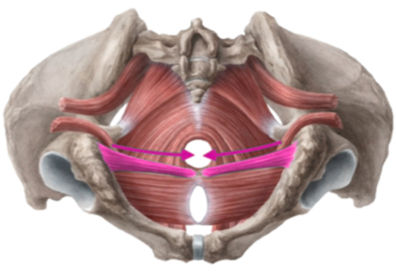
A coach may complete a certification with a solid understanding of biomechanics, programming, and exercise physiology while receiving little meaningful education on pelvic floor function. They may understand how to coach a squat but not understand how breathing mechanics influence pressure management during that squat. They may understand progressive overload but have little understanding of how pelvic floor symptoms may respond to changes in training load.
This gap is not a reflection of coach competency. It is a reflection of educational priorities.
Historically, the female body has been underrepresented within exercise science research and fitness education. While this is gradually changing, many coaches are still operating with significant gaps in knowledge regarding female anatomy, women's health, pelvic health, prenatal fitness, postpartum fitness, and female-specific exercise considerations.
As awareness grows, so too does the need for more advanced education.
A Case Study in Coaching Blind Spots
Imagine a female athlete who reports urinary leakage during box jumps.
A coach with limited pelvic floor education may immediately assume weakness and prescribe Kegel exercises.
A coach with a deeper understanding becomes curious.
They begin examining the athlete's overall training load, recovery status, movement patterns, breathing strategies, symptom history, and recent changes in programming. They recognise that leakage is not a diagnosis but rather a symptom that may have multiple contributing factors.
This shift from assumption to investigation is where advanced coaching begins.
The goal is not to diagnose. The goal is to understand the factors that may be influencing symptom presentation so that training can be adjusted appropriately and referrals made when necessary.
This approach leads to better outcomes not only for pelvic floor symptoms but for overall coaching effectiveness.
What Every Coach Should Understand Before Working With Women
If you coach women, you are coaching pelvic floors whether you realise it or not.
Every exercise selection decision influences movement demands. Every programming decision influences load exposure. Every coaching cue influences how a client moves, breathes, and responds to exercise.
This does not mean coaches should become pelvic health therapists. It does mean they should understand the fundamentals of pelvic floor function well enough to make informed exercise prescription decisions.
The future of women's fitness will belong to coaches who understand these relationships. Not because pelvic floor education replaces strength and conditioning principles, but because it enhances them.
The more we understand about the interaction between movement, breathing, pressure regulation, and pelvic health, the better equipped we become to support female clients across all stages of life.
When to Refer Out
Understanding pelvic floor function does not eliminate the need for interdisciplinary collaboration. Coaches should always operate within their scope of practice and recognise when referral is appropriate.
Persistent urinary leakage, significant pelvic pain, worsening prolapse symptoms, unexplained discomfort, or symptoms that fail to improve despite appropriate exercise modification warrant referral to a qualified pelvic health professional.
The best coaches are not those who attempt to solve every problem themselves. They are the ones who understand when collaboration is necessary and who build strong referral networks that ultimately improve client outcomes.
How Advanced Pelvic Floor Education Changes Coaching
Most coaches initially believe that becoming better requires learning more exercises. Over time, the most successful professionals realise that coaching is far less about exercises and far more about understanding human function.
Advanced pelvic floor education changes the questions coaches ask.
Instead of asking, "What exercise should I prescribe?" they begin asking, "What demand does this exercise create?"
Instead of asking, "What muscle is weak?" they begin asking, "What factors may be influencing this presentation?"
This shift transforms exercise prescription, movement assessment, programming decisions, and client communication. It creates coaches who are more adaptable, more observant, and ultimately more effective.
The Functional Pelvic Floor Coach™ 12-Week Online Mentorship
If reading this article has highlighted knowledge gaps that were never addressed during your certification, you're not alone.
The reality is that we've only scratched the surface. We have not explored the fascial relationships of the pelvic floor, the intricacies of pressure regulation, movement-specific demand profiles, the influence of hormonal changes, or the practical application of these concepts within real-world coaching environments.
The Functional Pelvic Floor Coach™ 12-Week Online Mentorship was created specifically to bridge these gaps.
Designed for personal trainers, strength coaches, women's health coaches, online coaches, exercise physiologists, gym owners, and fitness professionals, the mentorship provides an in-depth exploration of functional pelvic floor anatomy, movement assessment, breathing mechanics, exercise prescription, programming considerations, load management, prenatal fitness, postpartum fitness, and symptom prevention strategies.
Most importantly, it teaches coaches how to think critically about movement and pelvic floor function rather than simply memorising protocols.
Because better coaching does not come from having more exercises.
It comes from having a deeper understanding of the human body.
Strength training does not inherently cause pelvic floor dysfunction. However, exercise selection, programming decisions, breathing mechanics, recovery, load management, and movement strategies can all influence symptom presentation.
The pelvic floor is not an isolated structure. It functions as part of a broader integrated system involving the diaphragm, deep core, spine, hips, and nervous system.
For coaches, understanding these relationships is becoming increasingly important as more women seek evidence-informed support for their health, performance, and fitness goals.
The question is no longer whether pelvic floor education matters.
The question is whether coaches can afford to practice without it.



Comments