
“Why Is My Client Leaking During Exercise… Even Though She’s Doing Pelvic Floor Work?”
One of the most common questions personal trainers ask when working with women is:
“If my client is already doing pelvic floor exercises, why is she still leaking during training?”
The problem is that most people have been taught to think about pelvic floor dysfunction in isolation. Leakage during running, jumping, or lifting is immediately labelled as “weak pelvic floor muscles,” and the solution becomes more activation drills, more Kegels, or more cueing.
But the pelvic floor does not function independently.
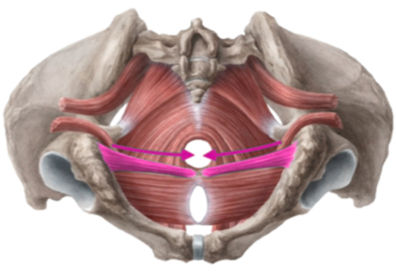
It is part of a dynamic pressure-management and force-transfer system involving the diaphragm, abdominal wall, rib cage, glutes, adductors, fascia, hips, and nervous system. Its role is not simply to contract. Its role is to respond reflexively and coordinate efficiently during movement, load, impact, and changes in intra-abdominal pressure.
This distinction matters enormously for personal trainers.
Because most urinary leakage does not occur lying on the floor during isolated contractions. It occurs during:
running
jumping
lifting
coughing
fatigue
high-force bracing
rapid pressure changes
In other words, symptoms often appear when the body fails to coordinate pressure and movement efficiently under demand.

The Science Personal Trainers Need to Understand
The pelvic floor works closely with the diaphragm and abdominal wall to regulate intra-abdominal pressure (IAP). During breathing and movement, the diaphragm and pelvic floor should move in coordination, while the surrounding musculature helps distribute and transfer force throughout the trunk and pelvis.
However, movement quality changes pressure management.
If a client:
excessively flares the ribs
loses pelvic control
overextends through the lumbar spine
breath-holds under load
collapses through femoral internal rotation
lacks gluteal control
or cannot tolerate force efficiently
…the pelvic floor may become mechanically disadvantaged regardless of how much isolated pelvic floor work is being performed.
This is one reason symptom presentation is often movement-dependent rather than purely strength-dependent.
Research increasingly supports this integrated model. An RCT comparing pelvic floor muscle training alone versus pelvic floor training combined with glute max, glute med, and hip adductor strengthening found the combined group experienced greater reductions in leakage frequency (Marques et al., 2020). Interestingly, measured pelvic floor strength outcomes between groups were not significantly different.
Mechanistically, this suggests improvements may have occurred through:
improved lumbopelvic stability
better pressure distribution
enhanced force transfer
improved timing and coordination
and more efficient reflexive muscle recruitment patterns
Not simply stronger isolated contractions.
This is critical because continence is largely reflexive. The pelvic floor must react rapidly to changes in pressure during dynamic movement. It is not realistic to expect women to consciously “squeeze their pelvic floor” every time they jump, sprint, or brace under load.
The body needs an efficient strategy, not just a stronger isolated muscle.
Why This Matters for Personal Trainers
As coaches, we are not diagnosing pelvic floor dysfunction or determining pelvic floor strength. That remains within the scope of pelvic health clinicians. However, coaches absolutely influence:
movement exposure
load progression
fatigue management
breathing strategies
exercise selection
impact tolerance
and movement quality
This means programming can either support pressure management… or challenge it beyond what the client currently has capacity for.
Many personal trainers unknowingly create environments where women repeatedly compensate through:
breath holding (Talasz et al., 2022)
excessive bracing
lumbar extension
poor hip mechanics (Walsh et al., 2026)
pelvic instability
or inefficient force transfer
Over time, this may contribute to symptom aggravation.
Understanding this changes how coaches view women’s training entirely.
Actionable Things Personal Trainers Can Start Looking At
This does NOT mean coaches should fear movement or remove all high-impact training. It means coaches need to understand how to progressively build tolerance and improve movement efficiency.
Some practical things to start observing include:
1. Breathing Strategy Under Load
Does the client excessively breath-hold during effort?
Do they lose rib positioning during lifts?
Can they maintain pressure control without aggressive bracing strategies?
Breathing mechanics directly influence diaphragm and pelvic floor coordination.
2. Hip and Pelvic Control
Watch for:
excessive pelvic shifting
hip drop during single-leg tasks
femoral internal rotation collapse
over-reliance on lumbar extension instead of hip extension
The glutes and deep hip musculature significantly influence pelvic positioning and force transfer.
3. Fatigue-Dependent Compensation
Many clients only demonstrate symptoms under fatigue.
Observe:
changes in breathing
loss of trunk control
altered landing mechanics
reduced force absorption
excessive gripping strategies
Movement quality under fatigue often reveals the real problem.
4. Exercise Selection and Progression
Not every client currently has the capacity for high-impact or high-pressure tasks.
This does not mean avoiding them forever.
It means asking:
Has the client developed adequate load tolerance?
Can they manage pressure efficiently first?
Is progression occurring too aggressively?
Are they compensating to achieve performance?
Good coaching is not about removing challenge. It is about sequencing challenge appropriately.
The Bigger Problem in the Fitness Industry
Most education around women’s health still teaches personal trainers isolated tools instead of systems thinking.
Coaches are given:
corrective exercises
activation drills
postpartum modifications
random cues
…but rarely taught:
how pressure management works
how movement influences symptom presentation
how fatigue alters coordination
how the hips influence continence mechanics
or how to build prevention-focused programming strategies
This is why so many personal trainers feel uncertain when working with women experiencing symptoms.
Because they were taught exercises, not frameworks.
Why I Created The Functional Pelvic Floor Coach™ Mentorship
The goal is not to turn personal trainers into pelvic health physiotherapists.
The goal is to help coaches better understand:
women’s physiology
movement strategies
pressure management
exercise implications
symptom patterns
and prevention-focused programming
Because women deserve coaches who understand how their bodies function during real movement and real training environments.
That is exactly why I created the Functional Pelvic Floor Coach™ Mentorship.
This 12-week online mentorship is designed to provide coaches with a prevention-focused framework for working with women across training, movement, physiology, and dysfunction patterns.
Not another toolbox.
A system.
The next intake begins July 11th, 2026.


Comments